
Education changes what a person can do
Education begins with the formation of a person capable of attention, understanding, judgment, and action. Facts and techniques matter because they become part of this larger capacity: the ability to meet a difficult question, recognise what is at stake, and find a direction of one's own.
A serious course of study gives time to ideas that resist an immediate summary. It introduces the arguments, works, and discoveries through which people have tried to understand the world. Learning to stay with a difficult text can change the quality of attention a person brings to everything else.
The public value of education is found in these changes. More people become able to enter a conversation, examine an institution, practise a craft, make a decision, or begin work that once seemed beyond their reach.
Knowledge enters
a person’s life.
- 01
Attention
Stay with a text or a question that resists a quick answer.
- 02
Understanding
Explain the idea and see how its parts belong together.
- 03
Judgment
Weigh reasons, alternatives, and consequences.
- 04
Action
Use what is understood in a decision or a work.
Heroic education: examples of possibility
A human example can expand the horizon of what seems possible. Someone once had to write the first page, question the accepted explanation, undertake the journey, or build the institution. Studying such a life makes the distance between an idea and an accomplished work visible.
Heroic education attends to the choices inside the achievement. What did the person notice? What were the constraints? Where did courage matter, and where did patience, assistance, revision, or luck matter? What did the work cost, and who carried that cost? The difficulties make the example usable.
The intention is to cultivate the capacity to undertake meaningful work. A person can admire another life while choosing a different direction. Examples should enlarge judgment and imagination, leaving room for disagreement, limits, and the discovery of one's own task.
Heroism also appears in care, fidelity, endurance, and accepting responsibility when there is little recognition. Education should make these forms of human greatness visible alongside celebrated achievements.
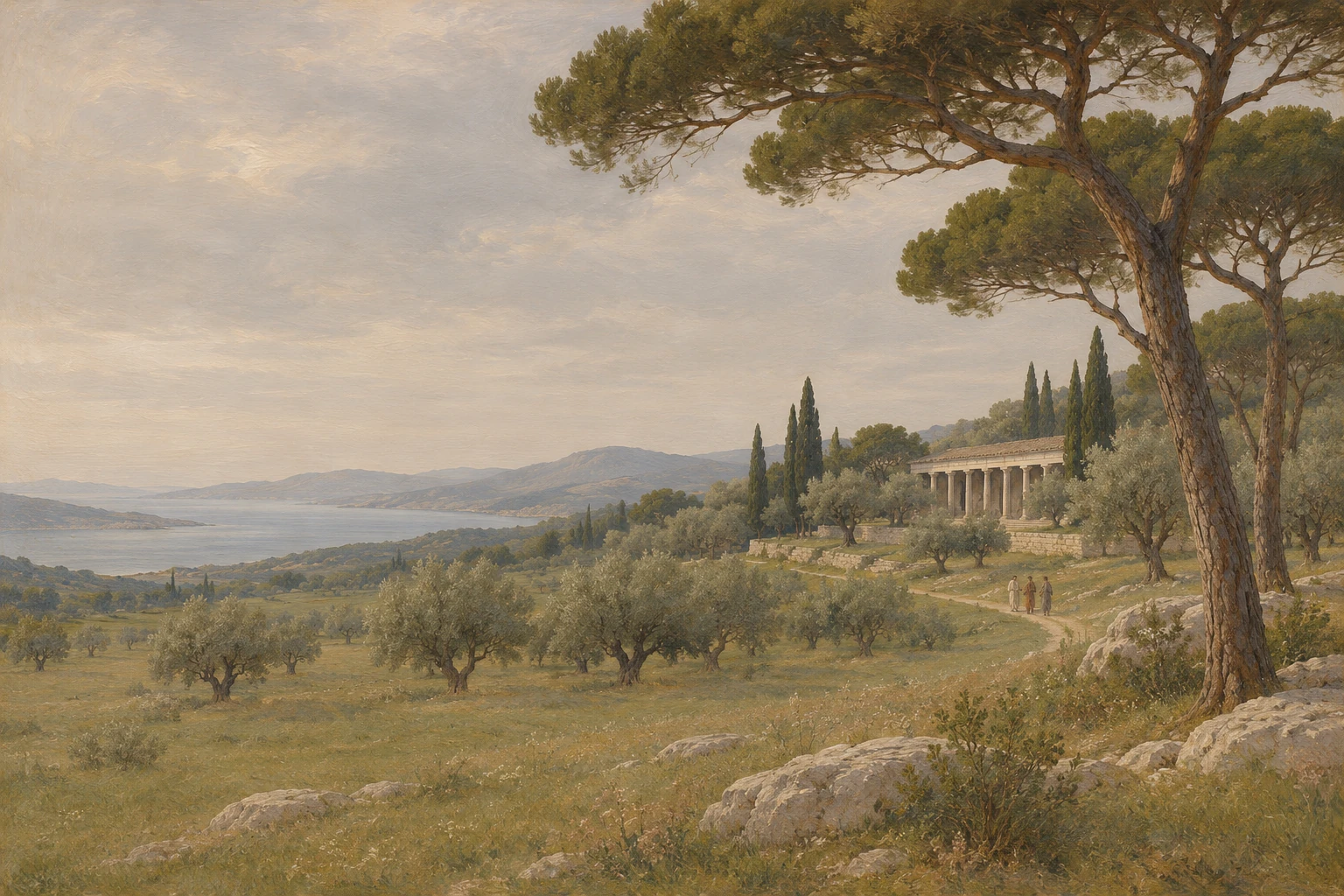
What made
the work possible?
What did they see?
Follow the decisions. Which possibilities did they notice, and which did they refuse?
What helped or resisted?
Look for constraints, collaborators, patient revision, and the part played by luck.
Who carried the cost?
Consider the effects on others, including those outside the celebrated story.
What is worth carrying forward?
An example can enlarge your possibilities while leaving you free to disagree.
Knowledge is a common inheritance
Every generation inherits an extraordinary body of thought. Books, translations, libraries, scientific methods, and teaching practices allow people to begin where earlier work left off. Preserving that inheritance and widening access to it are forms of public responsibility.
Access requires more than placing material online. Readers need paths into a subject, reliable distinctions, context, and opportunities to discover what they have understood. An abundant library becomes more useful when someone can find a beginning and follow a coherent course.
The pleasure of learning belongs in this project. Philosophy, history, mathematics, and art can matter to a person long before their practical consequences become apparent. Public education should protect room for that curiosity.
A library needs
ways in.
Books, ideas,
methods, works.
To understand,
judge, and create.
Conditions for independent judgment
Independent thought grows through encounter. A student needs strong arguments to consider, objections that deserve an answer, and enough knowledge to see when a familiar explanation is inadequate. Independence becomes more substantial as understanding becomes more precise.
Useful educational structures include a considered sequence of reading, explicit questions, practice, feedback, and opportunities to explain an idea in one's own words. Time matters. Some understanding emerges only after a problem has been revisited from several directions.
Digital tools can help organise this work. They can support navigation, questioning, revision, and access across languages. Their educational value depends on whether they strengthen the learner's own capacity to attend, reason, and act.
Understanding
has to be tried.
- 01 / Read
Follow an argument about what makes an action right.
- 02 / Question
Which assumption carries the conclusion?
- 03 / Explain
State the argument in your own words.
- 04 / Test
Consider a case that challenges the principle.
- 05 / Return
Revise the account in light of the objection.
Stoa: an idea made public
Stoa is an independent educational project founded by Timofei Sheludiakov. It brings courses and a freely accessible reading library into a shared space for sustained study. Its subject areas include antiquity, the humanities, business and economics, and mathematics.
The project combines an organised curriculum with opportunities to ask questions and test understanding. Its ambition is to make fundamental knowledge approachable without removing the depth that makes it worth studying.
Stoa gives these educational commitments a concrete place to develop. A curriculum can be improved, a text can become clearer, and a new reader can find a way into a subject. That continuing work is the substance of the project.