
A life of reason, fully lived
Noovitalism is a philosophy of intelligent, creative living. Understanding, a lively interest in the world, will, and responsibility give a person the means to shape a life and contribute to a shared world. Its concern is the whole person: thinking and feeling, work and friendship, the courage to begin and the patience to remain.
It begins with a practical question: what kind of life becomes possible when the desire to understand and the desire to live strengthen one another? An answer has to survive contact with ordinary days. It should help with a difficult commitment, an absorbing book, a relationship that needs care, or a project that has stopped being exciting.
This is a philosophical position about what is worth cultivating. It makes no promise that intelligence guarantees happiness, that effort deserves victory, or that a sufficiently strong will can abolish circumstance. A meaningful life is made among other people, under conditions we only partly choose.
The mind belongs to life
Reason is one of the ways a living person meets the world. We think with a history, a body, habits of attention, emotional commitments, and things we care about. What attracts our curiosity already says something about how we are alive. Understanding can then change those attractions: an unfamiliar subject becomes absorbing, a prejudice becomes untenable, a previously invisible possibility acquires a shape.
Reason gives experience distinctions. It lets us ask whether something is true, whether a desire is worth following, and whether a decision will do what we hope. It also gives us the capacity to recognise our own error. That capacity matters especially when an idea has become part of our identity.
A cultivated mind remains answerable to reality. Elegance, confidence, and a moving personal story cannot settle a factual question. Evidence, careful argument, and an honest account of uncertainty belong inside a vigorous life.
A judgment stays
open to the world.
- 01
Attend
Notice the particular situation before settling on an explanation.
- 02
Interpret
Bring experience, concepts, and questions to what you see.
- 03
Examine
Consider the evidence and the strongest competing account.
- 04
Revise
Change the judgment when the reasons call for it.
Vitality has many tempos
Vitality is an active interest in being alive. It can appear as appetite for a difficult undertaking, an unexpected conversation, a city, a landscape, or a piece of music. It also appears in the stillness required to notice something properly.
A person reading slowly, recovering from illness, listening to a friend, or allowing a problem time to mature may be living intensely. The visible speed of a day tells us little about its quality. Exhaustion can narrow perception until even impressive activity becomes mechanical.
Rest, pleasure, and contemplation have a place in their own right. They need no promise of future efficiency to become legitimate. The ambition of Noovitalism is a life with greater depth and range, including the freedom to stop, attend, enjoy, and recover.

Life has
many tempos.
Curiosity is already a reason
Some things deserve our attention because they are interesting. An ancient religion, a mathematical problem, the structure of a language, or the history of an unfamiliar place can reward us with the pleasure of understanding. Their value need not wait for a commercial application.
Curiosity also has consequences we cannot predict. An idea encountered for its own sake can later alter a decision, a taste, or an ambition. Reading can enlarge the set of questions a person is capable of asking. The world becomes more articulate as we learn to perceive it.
This is why education should leave room for intellectual adventure. A curriculum concerned only with immediately useful answers quietly teaches people to stop asking questions whose usefulness is not yet visible.
Understanding opens possibilities
New understanding can make new forms of life available. Learning a language opens conversations and literatures. Understanding music changes what can be heard. Acquiring a craft makes possible a kind of work that previously existed only as an admiration. The change concerns what a person can notice, attempt, make, and share.
Living through those possibilities changes the person again. Practice reveals distinctions that a beginner could not have understood in advance. Responsibility introduces questions that observation alone could not supply. An experience made possible by knowledge becomes the occasion for further knowledge.
The movement is conditional. Information can remain unused, a habit can become rigid, and an experience can pass without reflection. Development asks for attention and an environment in which learning can become practice. It also asks for the willingness to discover that the original idea was incomplete.
There is no final point at which a person has understood enough to begin living. Inquiry and experience continue to reshape each other throughout a life.
Understanding
makes room for life.
- 01 / UNDERSTANDING
Learn a language.
- 02 / POSSIBILITY
Enter new conversations.
- 03 / EXPERIENCE
Live among unfamiliar meanings.
- 04 / DEEPER UNDERSTANDING
Hear what once passed unnoticed.
Giving an idea a form
Creation brings something into a world that can answer back. A story has to be written. A school needs a curriculum, readers, and continuity. A business meets customers and costs. A relationship depends on what people actually do for one another. Each form of work exposes intention to consequences.
Beginning carries a particular pleasure: possibility is still expansive and the work has not yet revealed its demands. Finishing requires a different strength. It asks for decisions, revision, patience with details, and a willingness to give up imagined versions so that one real version can exist.
Will can be cultivated through keeping a chosen commitment long enough to learn what it requires. It includes the judgment to change direction when the evidence warrants it. Persistence is valuable when it serves worthwhile work; a commitment can also be mistaken.
Creation is broader than enterprise. Teaching, translating, making art, repairing an institution, raising a child, and sustaining a community all give human possibilities a durable form.
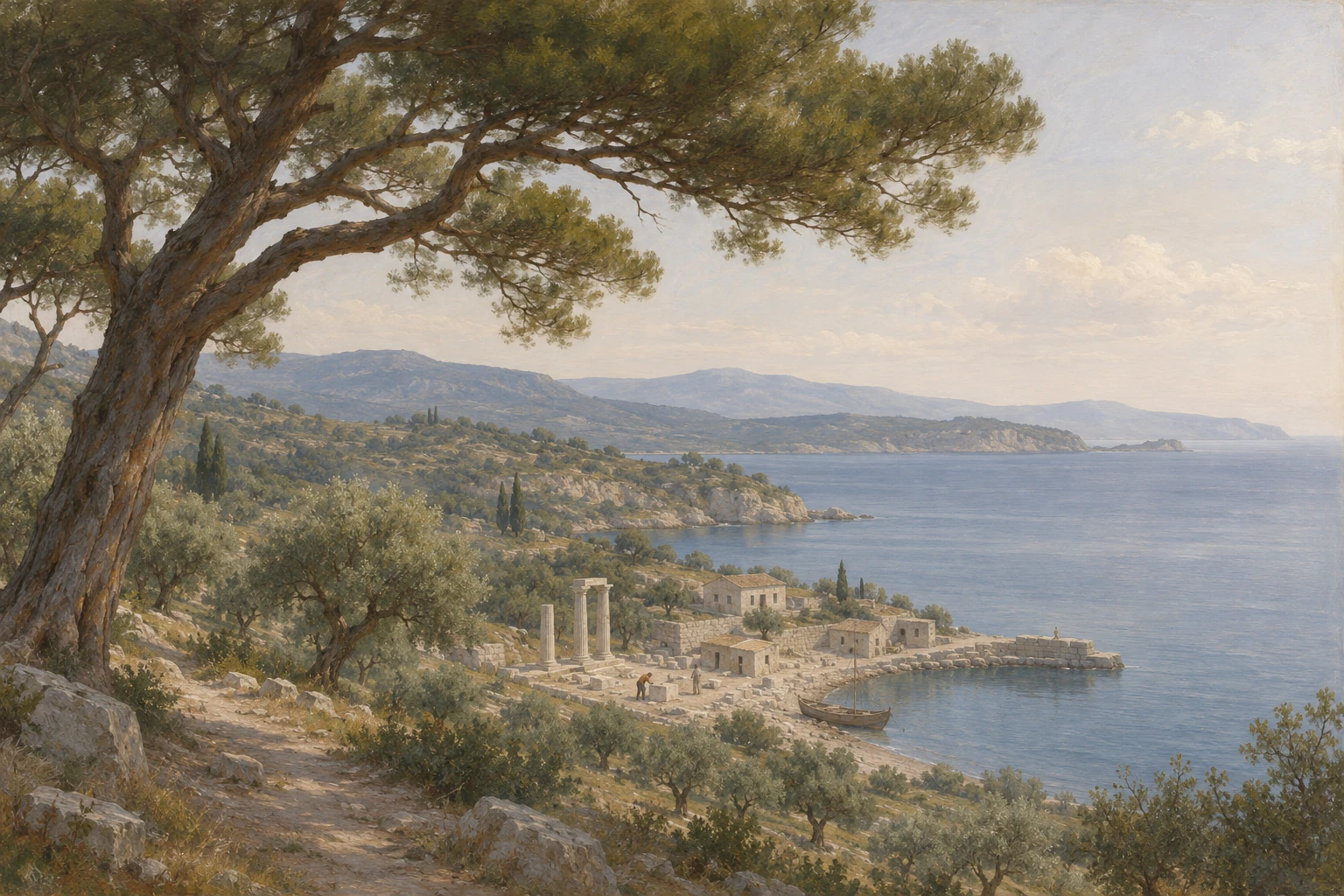
The first form
is a beginning.
- 01
An intention
Something seems worth bringing into the world.
- 02
A first form
Write a draft. Make a prototype. Try the lesson.
- 03
An encounter
The material, a reader, or a learner answers back.
- 04
A revision
Keep what holds. Rework what the encounter reveals.
Finish, share, and care for what others will use.
Freedom and chosen commitments
Personal sovereignty begins with the effort to make a judgment one's own. It requires some understanding of what is being chosen, what alternatives exist, and what consequences will follow. Independence of thought develops through study, conversation, and the capacity to withstand disagreement.
Freedom includes the ability to refuse, to reconsider, and to leave an inherited script. It also includes the ability to bind oneself to something: a person, a promise, a practice, or a demanding piece of work. A self-chosen commitment can give a life continuity and direction.
Sovereignty remains situated. People depend on languages, institutions, labour, and care they did not create alone. Recognising those dependencies makes independence more honest. The task is to act with judgment within them and to help build conditions under which others can exercise judgment too.
Responsibility gives action its weight
Responsibility begins with particular people and particular consequences. Who will rely on this promise? Who will bear the cost of this decision? What will need to be maintained after the exciting part is over? Such questions give ambition a human scale.
The person who creates something remains involved in what it becomes. Responsibility can require maintenance, correction, restitution, or admitting failure. It is often quiet work that receives less attention than a beginning.
Power increases the reach of a person's decisions and therefore the reach of what must be considered. The ability to act does not itself establish the rightness of an action. Strength gains meaning through the uses to which it is put and the obligations it accepts.
A direction that can develop
Vision gives different undertakings a relationship to one another. It is an emerging sense of the life one is trying to make: the work worth doing, the people worth being present for, the qualities worth practising, and the experiences one wants to remain open to.
A vision has enough continuity to guide a difficult choice and enough openness to be revised by experience. It can begin as an image, an admiration, a question, or the recognition that the present arrangement is insufficient. Its clarity often develops through action.
The useful test is whether it helps organise real attention. A beautiful account of a future life can become an escape from present work. A living vision connects what matters over years with something that can be done, learned, or cared for today.
A horizon.
A task for today.
What kind of work or life is worth developing?
Which undertaking gives that direction a form?
What can receive attention and effort now?
Taste is a practice of attention
Taste develops as we notice distinctions: a sentence that lands exactly, a room that lets people feel at ease, work whose form suits its purpose. It asks us to look closely and to learn why something succeeds. Exposure, comparison, patience, and care make judgment more precise.
Aesthetics also concerns the coherence of a life. Speech, work, surroundings, dress, and conduct can express the same standards of attention. The interest lies in whether form gives a truthful and generous expression to what a person values.
Beauty can be enjoyed without becoming an instrument for status. The point of developing taste is partly to become more available to the world: more capable of seeing, making, and taking pleasure in things that would otherwise pass unnoticed.
Love, friendship, and the ordinary day
Love and friendship are central goods of a human life. Another person has an existence and a freedom that exceed any role in our own development. To care for someone is to make room for that reality, including when it interrupts the schedule or changes the plan.
A life also includes meals, jokes, travel, music, private rituals, and hours with no achievement to report. Their significance can lie entirely in having lived them. Noovitalism leaves room for adventure and pleasure alongside seriousness and obligation.
The worth of a person cannot be read from a record of accomplishments. Illness, dependence, loss, and periods of uncertainty belong to human life. A philosophy that values vitality must remain attentive to people whose possibilities are constrained and to the care through which possibilities are restored.
The place of faith
Faith has a place in the questions through which a person gives a life meaning. It can involve trust, fidelity, religious conviction, or a relation to something that exceeds immediate calculation. Its significance cannot always be translated into an expected return.
Respecting that place also calls for intellectual honesty. When a claim concerns the observable world, it remains open to evidence and correction. Personal meaning does not exempt a factual assertion from examination.
Living with conviction and living with unanswered questions can coexist. The capacity to acknowledge a limit to one's knowledge is part of a serious relationship with truth.
Knowledge becomes
a human capacity.
Books · Languages · Tools · Institutions
Understanding · Judgment · Skill
Work that others can enter and extend
Education keeps the inheritance alive
Knowledge survives as a human capacity when new people learn to work with it. A saved text is only one part of the process. Someone has to read it, understand its questions, test its arguments, and find out where it leads.
Education can cultivate attention, intellectual courage, and a sense of what is possible. Human examples matter here. The life of a thinker, artist, scientist, or builder shows choices made under real constraints, with failures and unfinished work as well as achievements.
Stoa is a practical expression of this commitment: an educational project organised around sustained study and access to knowledge. It gives a public form to an idea that runs throughout Noovitalism: the life of the mind can enlarge a person's life and, through that person, the world shared with others.